Stars and HEDIS: The Quality Measures Your Meal Program Can Move
Health plan quality scores do not improve by accident. Here is how medically tailored meals connect directly to the measures that matter most.
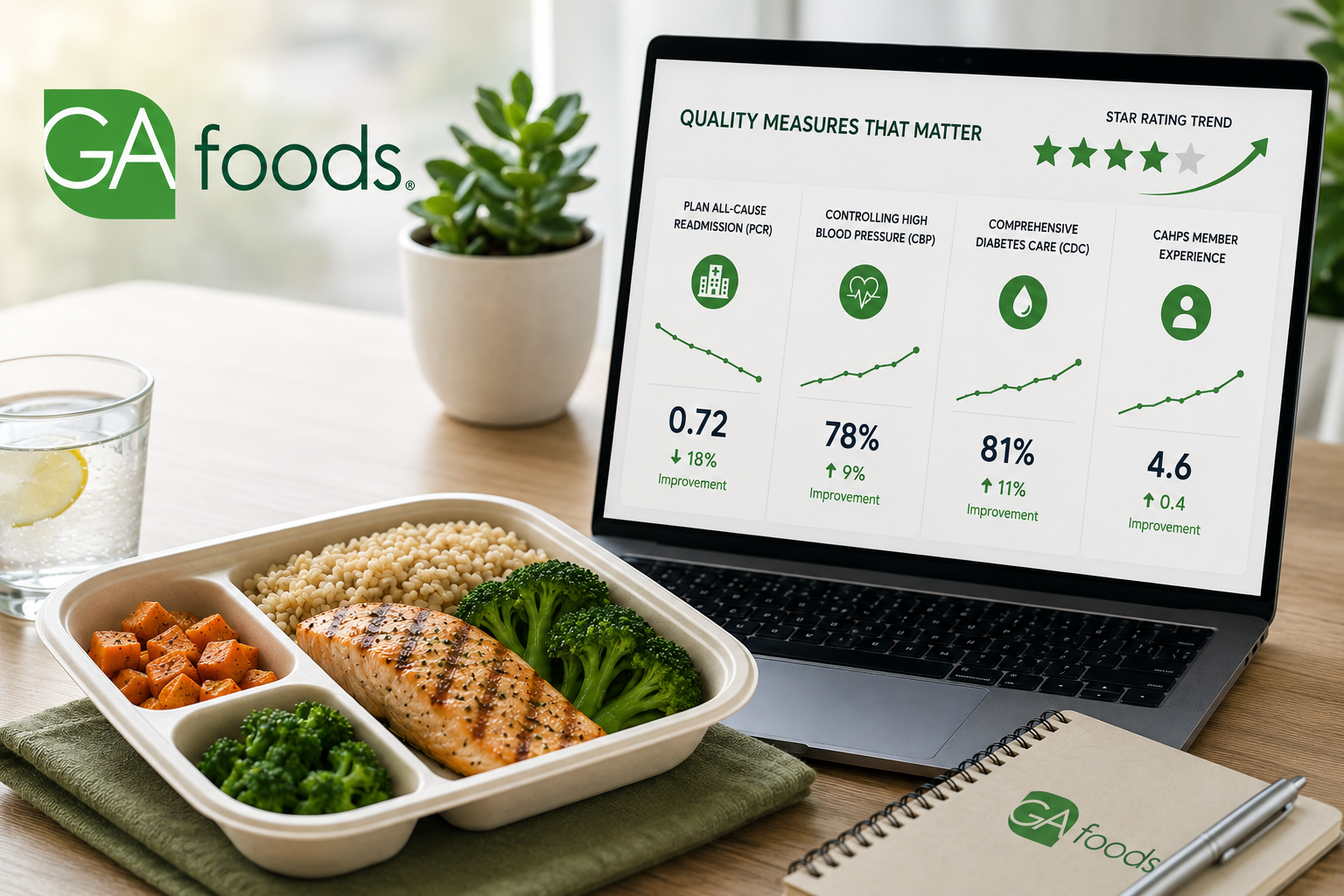
Every health plan quality team knows the measures they are chasing. Plan All-Cause Readmission. Controlling High Blood Pressure. Comprehensive Diabetes Care. CAHPS Member Experience. These are not abstract benchmarks. They are the metrics that determine star ratings, contract standing, auto-assignment eligibility, and in some markets, the plan’s ability to grow.
What fewer plans have fully mapped is the direct line between medically tailored meal programs and movement on each of these measures. Nutrition is not a soft benefit sitting outside the quality strategy. For high-risk populations managing chronic conditions, it is one of the most modifiable variables in the quality equation.
Here is how the connection works, measure by measure.
The Four HEDIS Measures Most Directly Linked to Nutrition
Plan All-Cause Readmission (PCR)
Measures the ratio of observed to expected acute inpatient readmissions within 30 days of discharge for Medicaid members ages 18 to 64.
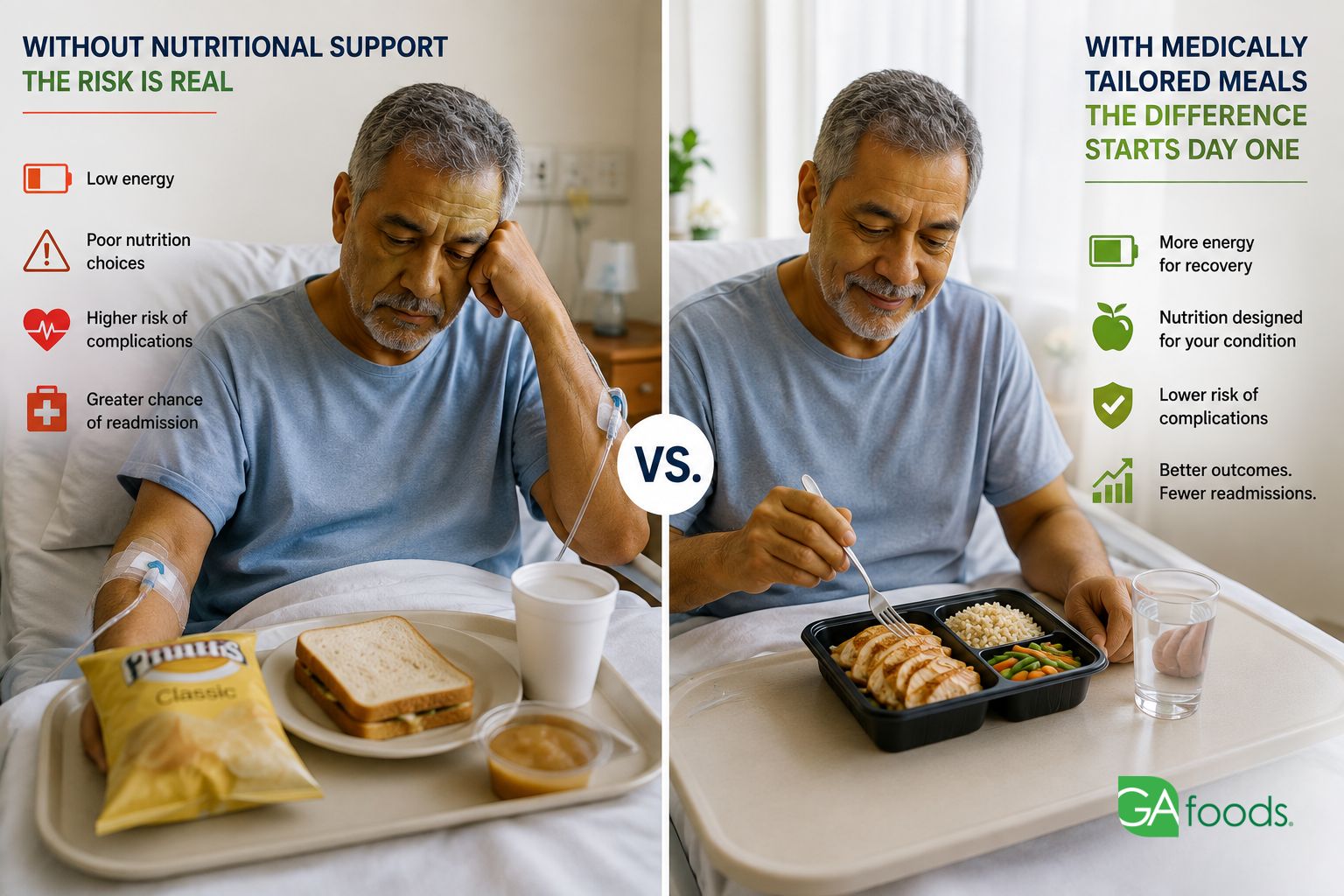
The post-discharge window is the highest-risk period for readmission, and nutritional status is one of the most consistent predictors of whether a member stabilizes or deteriorates at home. For members with heart failure, excess sodium intake triggers fluid retention within days of discharge. For members with diabetes, uncontrolled carbohydrate intake destabilizes blood glucose at exactly the moment when clinical progress is most fragile. A medically tailored meal program that activates on day one of discharge directly addresses the root cause of the deterioration pattern that leads to readmission. Plans that implement post-discharge meal programs for their highest-risk PCR populations reduce the numerator that drives their PCR ratio.
Controlling High Blood Pressure (CBP)
Measures the percentage of members ages 18 to 85 who had a diagnosis of hypertension and whose blood pressure was adequately controlled during the measurement year.
Sodium is the single most studied dietary variable in hypertension management. A member with high blood pressure who receives sodium-controlled meals at home has a measurable advantage in blood pressure management compared to a member eating an uncontrolled diet. For plans with members in food-insecure or low-access environments, medically tailored meals are often the only reliable mechanism for delivering sodium-appropriate nutrition consistently. Every percentage point of improvement in CBP performance reflects members whose blood pressure is being controlled, and dietary sodium management is a direct contributor to that outcome.
Comprehensive Diabetes Care (CDC)
A composite measure tracking HbA1c testing and control, blood pressure control, eye exams, kidney health monitoring, and statin therapy for members with diabetes.
Glycemic control is fundamentally a dietary management challenge. For members with type 2 diabetes, carbohydrate-controlled meals that align with their medication regimen and clinical targets make HbA1c control significantly more achievable than clinical management alone. GA Foods designs diabetes-specific menus with registered dietitian oversight to support glycemic stability across the post-discharge window and beyond. Plans with large diabetes populations can treat medically tailored meal programs as a population health intervention with direct CDC measure impact, particularly on the HbA1c control components of the composite.
CAHPS Member Experience
Measures member-reported experience across access to care, coordination, and overall satisfaction with their health plan.
Member experience is shaped by every touchpoint a member has with their plan, including the services and benefits the plan arranges on their behalf. A member who receives medically appropriate meals at home following a hospital discharge has a tangible, personal experience of their health plan taking care of them. That experience translates into survey responses. Plans that offer meaningful supplemental benefits, including medically tailored meal programs, consistently outperform plans that do not on the member experience components of CAHPS. The meal on the doorstep is one of the most visible and personal expressions of what a plan does for its members.
For high-risk members, a medically tailored meal is not a supplemental benefit. It is the clinical intervention that makes every other quality measure more achievable.
Why Nutrition Moves These Measures When Other Interventions Struggle
Care management calls, provider outreach, and member education all have a role in quality improvement. But each of these interventions faces a fundamental limitation: they change what members know without necessarily changing what members are able to do.
A member with heart failure understands they should follow a low-sodium diet. The care management team has told them. Their discharge instructions say so. The barrier is not knowledge. It is access. When the right food is not available, accessible, or affordable, clinical knowledge does not translate into clinical outcomes.
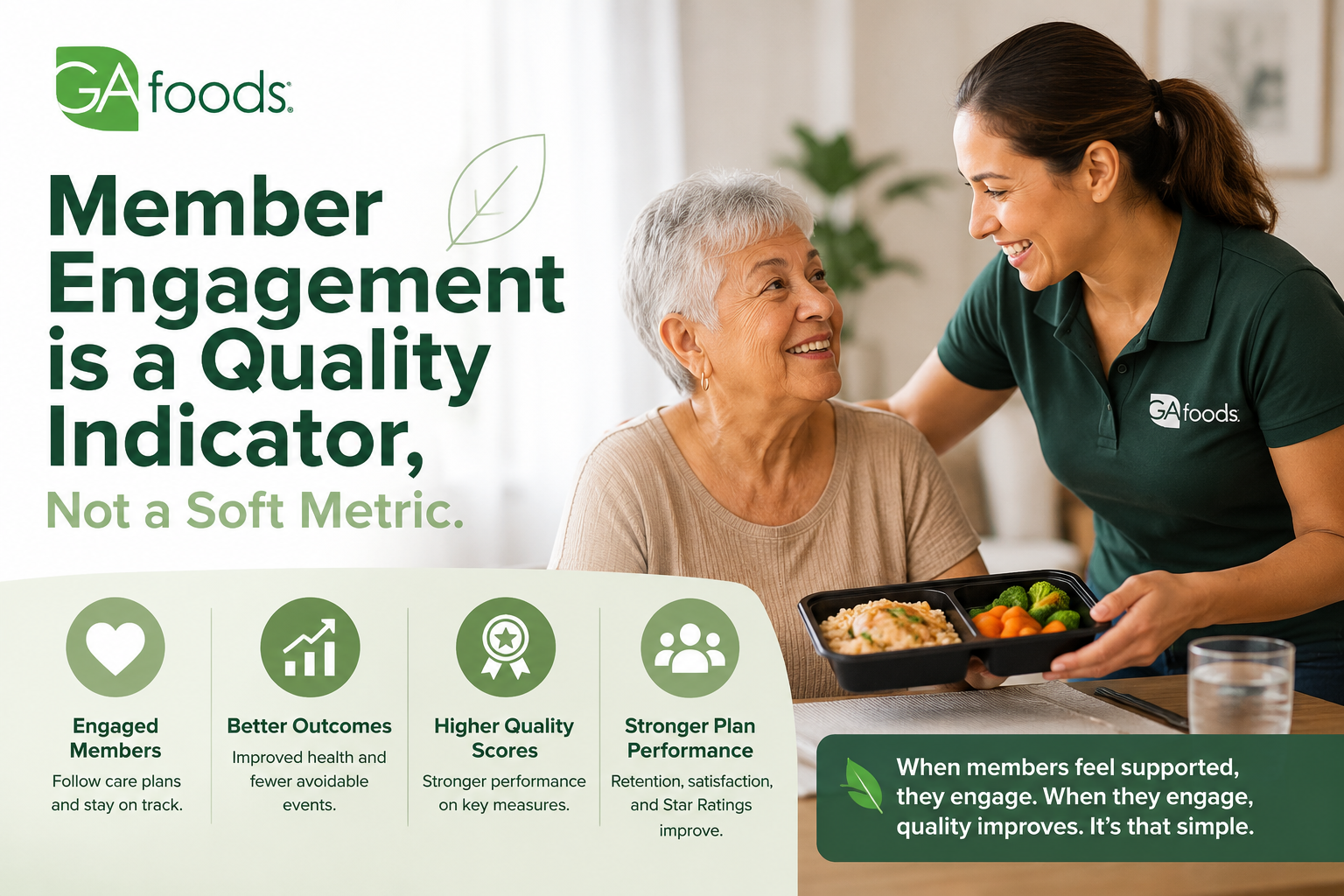
Medically tailored meals remove the access barrier entirely. The right food arrives at the door, calibrated to the member’s specific condition, without requiring the member to navigate grocery stores, read nutrition labels, or make dietary decisions under conditions of fatigue, limited mobility, and financial stress.
That is why nutrition-based interventions move quality measures in populations where other care management strategies have plateaued. They address the gap between what members are supposed to do and what they are actually able to do.
Knowledge does not change outcomes. Access does. Medically tailored meals close the gap between what members know and what they can actually do.
How GA Foods Structures Programs Around Quality Outcomes
GA Foods works with health plan quality teams to design meal programs that align with the specific quality measures the plan is focused on improving. That means understanding which member populations are driving PCR performance, which zip codes have the highest hypertension burden, and which diabetes members are furthest from HbA1c control targets.
Our registered dietitians develop menus for each clinical profile. Our delivery infrastructure reaches the members who need the intervention most. And our reporting gives quality teams the data they need to track program engagement, connect meal delivery to clinical outcomes, and demonstrate program value to state partners and leadership.
We have been building programs around clinical outcomes for over 50 years. The HEDIS framework has changed. The populations have grown more complex. The evidence base has expanded. What has not changed is the fundamental relationship between the right nutrition and the right clinical outcome.
If your plan is working to move specific HEDIS measures and wants to understand how a medically tailored meal program could contribute, we would like to have that conversation.

Digital Creative Specialist