When a Patient Is Too Weak for Treatment: What Food Is Medicine Means at the Bedside
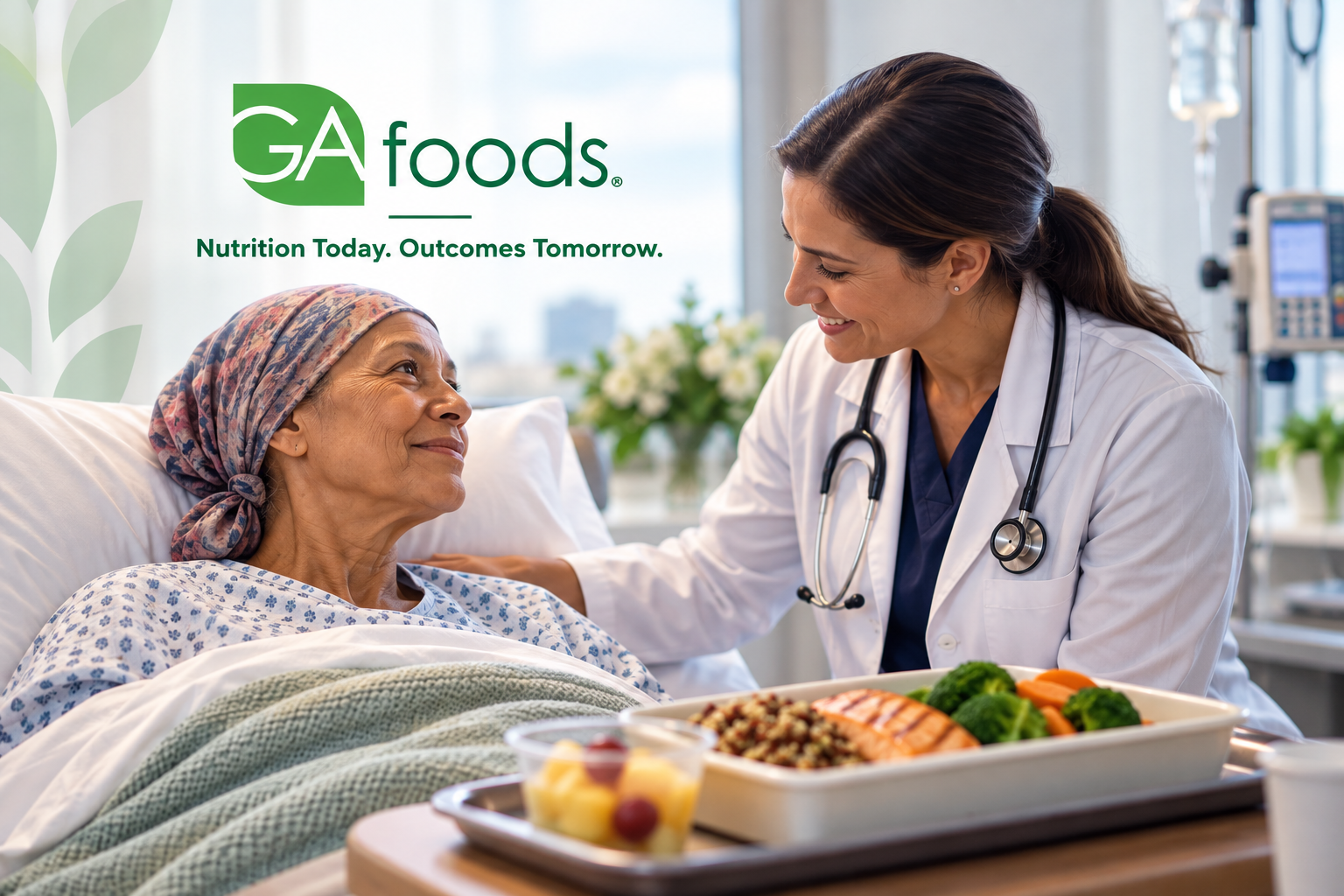
Food is Medicine is a policy framework and a quality strategy. But at the clinical level, it is something more immediate: it is what makes treatment possible at all.
There is a version of the Food is Medicine conversation that lives in policy documents, quality dashboards, and managed care strategy decks. That version is important and we have covered it across this campaign: readmission rates, HEDIS measures, post-discharge nutrition, member engagement, return on investment.
But there is another version of this conversation that happens in oncology clinics, hospital rooms, and primary care offices every day. It is more immediate, more human, and in some ways more urgent than anything a quality scorecard can capture.
It goes like this: a patient is scheduled for chemotherapy. They arrive for their appointment. The oncologist assesses them and finds they are too weak, too malnourished, too depleted to tolerate the treatment. The session is cancelled. The patient goes home. The cancer keeps growing. The provider cannot bill for a treatment they could not administer. And the window for effective intervention narrows.
That is what Food is Medicine means at the bedside. Not a supplemental benefit. Not a quality level. The difference between a patient who can receive treatment and one who cannot.
The Clinical Reality That Providers Are Living
Malnutrition is one of the most prevalent and most under addressed conditions in the healthcare system. It is estimated that a significant proportion of hospitalized patients and a substantial number of outpatients managing chronic or serious illness are malnourished or at serious risk of malnutrition at the time of their care encounters.
For providers, this is not an abstract statistic. It is a clinical reality that shapes what they can and cannot do for their patients every single day.
Oncology: Malnutrition and Treatment Tolerance
The clinical reality: Cancer and its treatment place enormous metabolic demands on the body. Chemotherapy, radiation, and surgery all require a level of nutritional reserve that many patients, particularly those who are elderly, low-income, or managing food insecurity alongside their diagnosis, simply do not have. When a patient arrives for a scheduled treatment too depleted to tolerate it, the appointment is cancelled. The treatment window shifts. The disease progresses during the gap.
What this costs: The provider loses the revenue from a cancelled treatment session. The patient loses time in a disease where time is the most critical variable. The health plan absorbs the downstream cost of a patient whose disease has progressed further than it would have with uninterrupted treatment. Everyone in the system pays for a problem that adequate nutrition support could have prevented
Surgical Recovery: Nutrition as a Prerequisite for Healing
The clinical reality: Surgical outcomes are directly tied to nutritional status before and after the procedure. Malnourished patients have higher rates of surgical complications, longer hospital stays, higher rates of post-surgical infection, and slower wound healing. For elective procedures, surgeons increasingly screen for malnutrition as a prerequisite for scheduling. For urgent procedures, malnutrition elevates every risk metric on the table.
What this costs: Extended hospital stays, surgical complications, and post-operative readmissions all represent costs that fall on the health plan, the hospital, and ultimately the patient. The evidence on pre- and post-operative nutrition intervention is clear: patients who are nutritionally supported before and after surgery have better outcomes across every metric that matters. The cost of that support is a fraction of the cost of a single complication.
Chronic Disease Management: When the Treatment Plan Requires Nutrition to Work
The clinical reality: For patients managing diabetes, heart failure, or chronic kidney disease, the clinical treatment plan and the nutritional plan are inseparable. Medications calibrated to a patient’s dietary intake lose their effectiveness when that intake is inconsistent or clinically inappropriate. Insulin dosing that assumes carbohydrate-controlled meals fails when the patient cannot access or afford those meals. Blood pressure medications work less effectively when sodium intake is uncontrolled.
What this costs: Providers managing these patients in primary care or specialty settings know that they are trying to optimize a clinical protocol in the absence of a nutritional foundation that would make it work. That gap produces uncontrolled conditions, escalating medication regimens, more frequent office visits, and eventually the acute events that hospitalization and readmission represent.
A treatment plan without a nutrition plan is a clinical protocol missing its foundation. Providers know this. The system has been slow to act on it.
What Food Is Medicine Looks Like From the Provider’s Perspective
Physicians and advanced practice providers who work with high-risk, medically complex patients have long understood the relationship between nutrition and treatment outcomes. What has been missing is the operational infrastructure to address it.
Writing a referral for medically tailored meals requires knowing that a program exists, that it is accessible to the patient, that it will deliver meals appropriate for the patient’s specific condition, and that the patient’s insurance will cover it. For most providers, navigating those requirements adds administrative burden to an already constrained clinical workflow. The result is that nutrition intervention, even when the provider knows it is necessary, often does not happen.
This is where the policy evolution around Food is Medicine becomes practically important. As Medicaid Community Supports, Medicare Advantage supplemental benefits, and 1115 waiver programs have expanded funding and authorization pathways for medically tailored meals, the operational barrier for providers has started to come down. A referral pathway that is clear, fast, and covered by the patient’s plan changes the calculus entirely.
When a provider can refer a patient to a medically tailored meal program the same way they refer to a specialist and know that the patient will receive appropriate nutrition support within days, the Food is Medicine framework stops being a policy aspiration and becomes a clinical tool.
When the referral pathway is clear and the meals are covered, Food is Medicine becomes a clinical tool, not a policy aspiration. That is the shift that changes outcomes.
The Health Plan’s Role in Making This Work at the Bedside
Health plans sit at the intersection of clinical care and operational infrastructure. They determine what benefits are available, what is covered, and how referrals are processed. In the Food is Medicine equation, that position is not passive. It is decisive.
A plan that funds medically tailored meals through its Medicaid Community Supports or Medicare Advantage supplemental benefits, and builds a clear referral pathway for providers, changes what is clinically possible for every provider in its network. The oncologist who wants to nutritionally support a patient before chemotherapy has an accessible option. The surgeon who wants to reduce post-operative complication risk has a covered intervention. The primary care physician managing a diabetic patient who cannot afford appropriate food has a resource to refer to.
That infrastructure does not just improve quality scores, though it does that too. It changes what treatment is possible for the patients most at risk of falling through the gap between what medicine can do and what the circumstances of their lives allow.
GA Foods has been the operational partner making that possible for health plans, providers, and members for over 50 years. We know how to move fast at the point of referral, how to deliver condition-appropriate nutrition at clinical standards, and how to coordinate with care teams so that the nutritional intervention is integrated into the clinical plan rather than sitting beside it.
If your plan is thinking about what Food is Medicine means beyond the quality dashboard and into the clinical reality your providers and members are navigating every day, we would like to be part of that conversation.

Digital Creative Specialist