Member Engagement Is a Quality Indicator, Not a Soft Metric
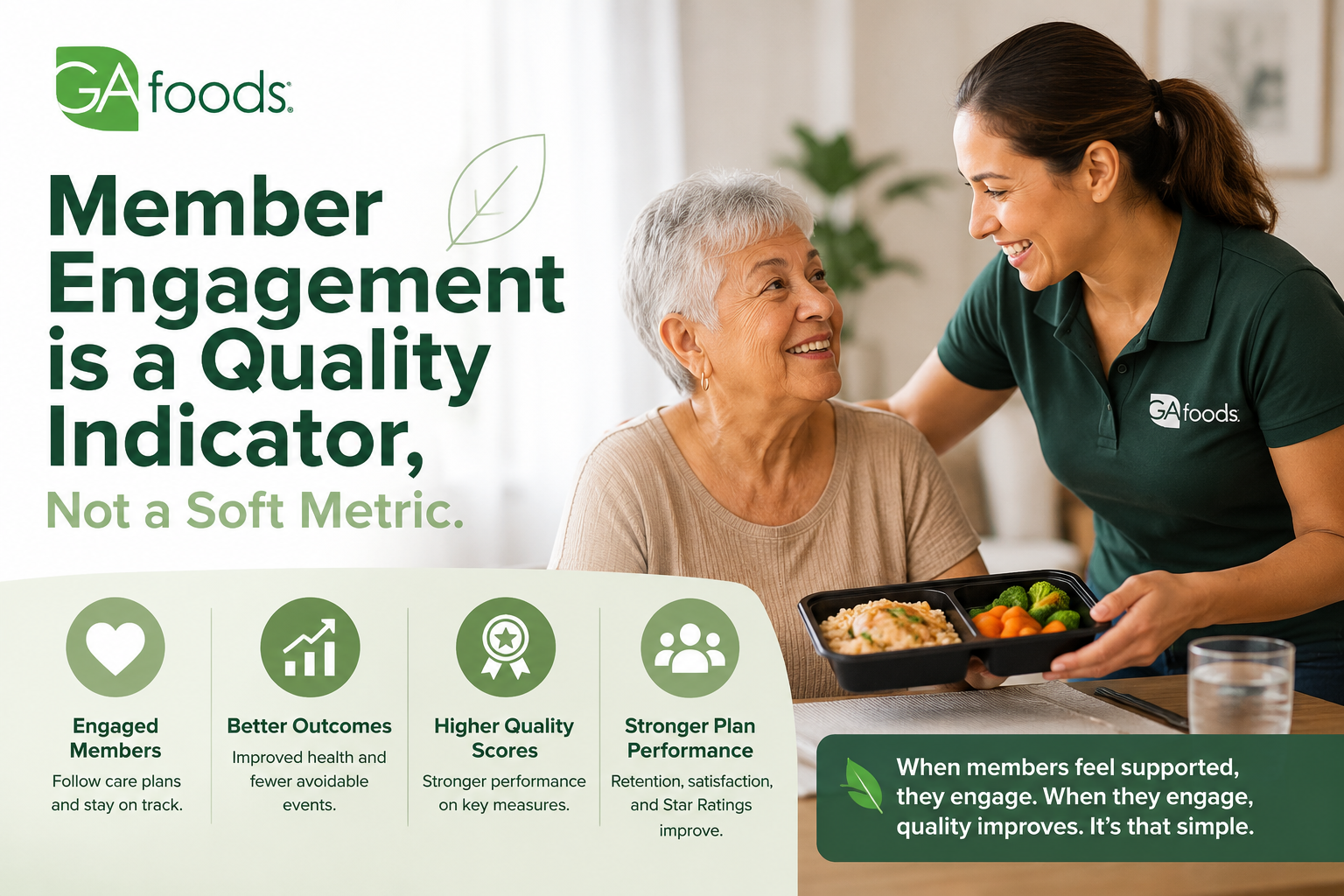
Health plans spend significant resources trying to keep high-risk members engaged in their care. Here is why a meal program is one of the most effective engagement tools available.
Ask any care management director what their biggest operational challenge is and the answer is usually some version of the same problem: members do not answer the phone. They do not open letters. They miss appointments. They disengage from their care plan at exactly the moments when engagement matters most.
Member engagement is not a soft goal. It is a clinical and operational necessity that drives quality scores, affects CAHPS performance, and determines whether the care management investment a plan makes actually reaches the people it is intended for.
What few plans have fully recognized is that a medically tailored meal program is one of the most reliable member engagement tools available, not because it is designed as an engagement tool, but because of what it does by its nature. It shows up. Consistently. At the member’s door. With something the member values.
That consistency creates something that no phone call or mailer can replicate: a trusted, recurring touchpoint between the plan and the member built on a tangible act of care.
Why Member Engagement Is So Hard to Sustain for High-Risk Populations
High-risk members, the populations that drive the most cost and quality measure impact, are also the hardest to keep engaged. The reasons are structural, not motivational.
Mobility and access barriers
Members recovering from a hospitalization, managing multiple chronic conditions, or living with functional limitations face real physical barriers to engagement. Attending care management appointments, picking up medications, or even answering a phone during a difficult health period requires energy that many high-risk members simply do not have. Outreach that requires the member to take action is at a structural disadvantage with this population.
Trust deficits in high-need communities
Many of the communities that Medicaid MCOs serve have historical and ongoing reasons for distrust in health systems. Cold outreach from a plan representative, however well-intentioned, starts from a trust deficit. Building the kind of relationship that produces genuine engagement takes repeated, positive contact over time, and most care management programs simply do not have enough touchpoints to build that relationship before it matters.
Competing priorities and health literacy gaps
For members managing food insecurity, housing instability, or caregiving responsibilities alongside a chronic condition, health plan engagement is not always the highest priority. Care management materials written at a clinical reading level, portals that require technology access, and programs that feel administratively complex all create friction that reduces participation rates among the members who need engagement most.
The hardest members to reach are the ones whose engagement matters most. Outreach that requires them to take action is already at a disadvantage.
What Makes a Meal Delivery Program Different as an Engagement Tool
A home-delivered meal program inverts the engagement dynamic entirely. Instead of asking the member to do something, it does something for the member. That structural difference changes everything about how the relationship develops.
Consistency builds trust
A meal that arrives on schedule, on the day it was promised, with food that is appropriate for the member’s condition, is a repeated demonstration that the plan follows through. Over days and weeks, that consistency builds a form of trust that no single outreach call can establish. Members who trust that the plan delivers on its commitments are more likely to engage when the plan asks something of them.
Delivery creates a natural touchpoint
Every meal delivery is a moment of contact. At GA Foods, that contact is not passive. Our care team follows up with members to confirm receipt, ensure meals are meeting dietary needs, and flag any concerns back to the care management team. That follow-up transforms a logistics event into a clinical touchpoint, one that the member welcomes because it comes attached to something they value.
Satisfaction with the program transfers to the plan
When a member has a positive experience with a benefit their plan arranged, that satisfaction transfers to their perception of the plan overall. A member who receives appropriate, reliable, high-quality meals through their health plan is a member who feels cared for by their plan. That feeling is what CAHPS surveys are measuring when they ask about overall plan satisfaction, and it is one of the most reliable drivers of high survey scores.
Engaged members are more reachable for everything else
Members who are engaged with their meal program are demonstrably easier to reach for care management outreach, medication adherence programs, and preventive care appointments. The meal program creates a relationship of positive contact that opens the door for other engagement. Plans that treat medically tailored meals as a standalone benefit miss the multiplier effect: engaged members participate more in everything.
A meal at the door is not just food. It is proof that the plan shows up. That proof is the foundation of every other engagement effort the plan makes.
How Member Engagement Shows Up in Quality Metrics
Member engagement is not a soft outcome that disappears when the spreadsheet opens. It shows up directly in the quality measures that determine plan performance.
CAHPS Member Experience
The Consumer Assessment of Healthcare Providers and Systems survey measures member-reported experience across access, coordination, and overall satisfaction. Members who receive meaningful, well-executed supplemental benefits consistently rate their plans higher across these dimensions. The meal program is one of the most tangible and memorable benefits a plan can offer, and tangible benefits drive CAHPS scores in ways that administrative improvements alone cannot.
Care management participation rates
Plans that operate meal programs alongside care management programs report higher participation rates in those programs among members who receive meals. The trust established through meal delivery makes members more receptive to care management outreach, more likely to answer calls, and more likely to follow through on care plan recommendations. That participation translates into better chronic condition management and lower utilization over time.
Medication adherence and appointment completion
Members who are engaged with their plan through a meal program are more likely to fill prescriptions and keep follow-up appointments. The relationship established through consistent, positive contact creates a foundation for the behavioral engagement that drives these downstream outcomes. Plans that measure medication adherence and preventive care completion in their meal program populations consistently see performance above their non-meal-program baseline.
GA Foods: Engagement Built Into Every Delivery
GA Foods does not treat member engagement as a separate program layer. It is built into how we operate. Every delivery is an opportunity for contact. Every follow-up call is an opportunity to identify needs, flag concerns, and strengthen the relationship between the member and their care team.
Our care team works in coordination with health plan care managers to ensure that what we learn through member contact is shared appropriately and acted on. When a member mentions that they have not been feeling well, or that they are having difficulty with a medication, or that they have a question about their care plan, that information reaches the people who can act on it.
That coordination turns a meal program into a care program. And a care program that members actually engage with is the foundation of the quality outcomes that health plans are working to achieve.
If your plan is looking for a member engagement strategy that creates real, measurable contact with your highest-risk members, we would like to show you what that looks like in practice.

Digital Creative Specialist