The 30-Day Window After Discharge: What Nutrition Has to Do With Readmission
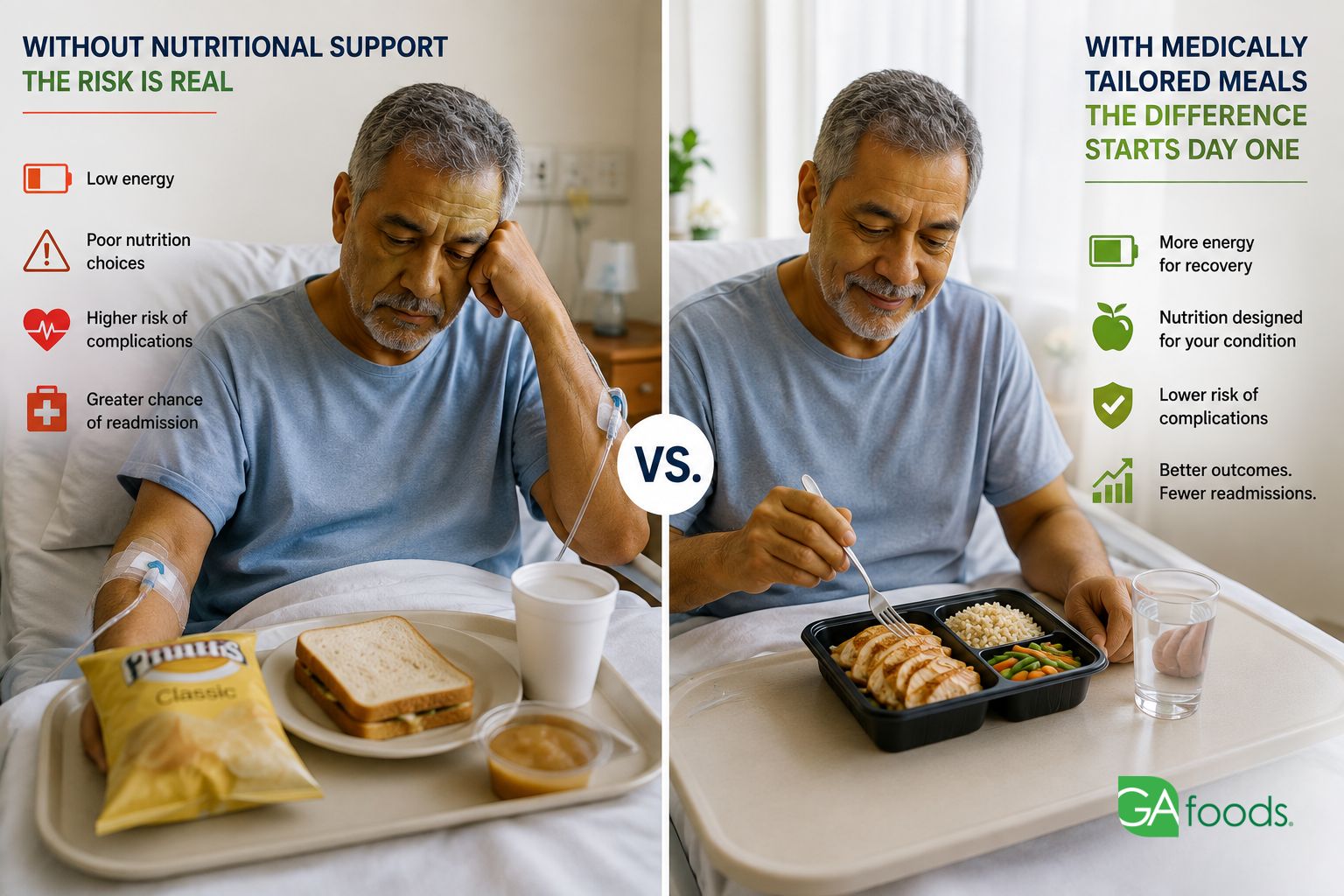
Health plans spend enormous resources managing the post-discharge period. Here is the factor most plans are still underinvesting in.
The discharge paperwork is signed. The prescriptions are filled. The follow-up appointment is on the calendar. By every clinical measure, the hospital has done its job.
Then the member goes home. And what happens next is largely out of the hospital’s hands.
For health plans managing high-risk Medicaid and Medicare Advantage populations, the 30-day post-discharge window is simultaneously the most expensive and the most preventable period in the care cycle. It is also the window where nutrition, not medication, not care management calls, is one of the single most modifiable factors driving whether a member recovers or returns.
Why 30 Days After Discharge Is the Highest-Stakes Window
Readmissions within 30 days of discharge are among the most scrutinized events in managed care. They are costly, quality-affecting, and frequently preventable. CMS tracks them. State Medicaid agencies track them. Health plans carry the financial and performance burden when they occur.
The HEDIS Plan All-Cause Readmission (PCR) measure evaluates the ratio of observed to expected acute readmissions within 30 days of discharge for Medicaid members ages 18 to 64. A high ratio signals that a plan’s members are returning to the hospital at rates above what their clinical profile would predict. And while many factors contribute to readmission risk, nutrition access is one of the most consistent, and most correctable, variables in that equation.
For members with heart failure, chronic kidney disease, or diabetes, the dietary requirements after discharge are precise and consequential. Getting those requirements wrong does not take weeks. It can take days.
The 30-day readmission window is not just a clinical failure. In many cases, it is a nutrition access failure that no one in the care plan addressed.
What Happens When Members Go Home Without Nutritional Support
The deterioration pattern for high-risk members without post-discharge nutrition support follows a predictable trajectory.
Days 1 through 7
In the first week home, members are at their most vulnerable and least capable of managing their own dietary needs. Energy is depleted, appetite is often disrupted by medication changes, and mobility may be significantly limited. The practical result: members eat whatever is accessible. For many high-risk members, that means high-sodium, high-sugar, or otherwise clinically inappropriate food that directly conflicts with their discharge instructions.
For a member with heart failure, excess sodium in those first days triggers fluid retention within 72 to 96 hours. For a member with diabetes, uncontrolled carbohydrate intake destabilizes blood glucose rapidly. The damage begins almost immediately.
Days 8 through 14
By the second week, the clinical indicators that were stabilized during hospitalization begin to shift. Blood pressure rises. Glycemic control deteriorates. Fatigue increases, which paradoxically makes it even harder for members to prepare appropriate food even when they understand what they should be eating.
This is the window where care management outreach often begins, but the dietary component of recovery is already compromised. A phone call does not address what was or was not in the refrigerator on day three.
Days 15 through 30
This is where the cycle closes. Symptoms that were managed during hospitalization return at sufficient severity to prompt action. ED visits increase. Members call their care managers in distress. For a significant portion of high-risk members, this period ends with an unplanned readmission.
The clinical progress made during a hospitalization, at significant cost to the plan and significant physical toll on the member, is erased. And the cycle starts again.
A care management call on day fifteen cannot undo what happened at the dinner table on day two.
The Cost of Getting This Wrong
An unplanned hospital readmission represents one of the highest-cost, lowest-value events a health plan absorbs. The direct cost of acute inpatient care is substantial. But the downstream costs compound it: additional care management resources, specialist engagement, pharmacy changes, and the erosion of quality metrics that affect plan performance evaluations and contract standing.
For Medicaid plans, readmission rates carry particular visibility. They affect HEDIS PCR performance, state quality reviews, auto-assignment eligibility in competitive markets, and in some cases, contract renewal outcomes. A plan that manages readmission risk effectively is a plan that controls a significant portion of its total cost of care.
The cost of intervening before that readmission occurs is, by comparison, remarkably low. A structured post-discharge meal program costs a fraction of one inpatient readmission. And unlike many care management interventions, it addresses the root cause, not the symptom.
What Medically Tailored Meals Do That Generic Food Assistance Cannot
Home-delivered meals are not all equivalent. The distinction between a medically tailored meal and general food assistance matters clinically and operationally.
A medically tailored meal is developed by a registered dietitian to meet the precise dietary requirements of a member’s diagnosed condition. It is not a meal kit. It is not a general nutrition supplement. It is a clinical intervention delivered through a food vehicle, calibrated to what that member’s body needs during recovery.
For a member with heart failure: sodium-controlled, fluid-appropriate meals that reduce the risk of fluid retention and respiratory distress during the recovery period.
For a member with diabetes: carbohydrate-controlled meals designed to support glycemic stability when blood sugar is most vulnerable to fluctuation.
For a member with chronic kidney disease: phosphorus and potassium-managed meals that protect kidney function and reduce the risk of metabolic complications that could accelerate disease progression.
When those meals are delivered to a member’s door on the day of discharge or within 24 hours, the intervention begins immediately. The post-discharge window stays open. The readmission risk starts to come down from day one, not day fifteen.
The right meal on day one of discharge is worth more than the best care management call on day fifteen.
What This Means for Health Plans Evaluating Post-Discharge Programs
For health plans assessing their post-discharge strategy, medically tailored meals represent one of the clearest and most operationally straightforward interventions available. The program is:
Fundable through existing mechanisms: Medicaid Community Supports, 1115 waiver authority, Medicare Advantage supplemental benefits, and LTSS frameworks all provide pathways to fund medically tailored meal programs without new appropriations.
Activatable at the point of discharge: Unlike many interventions that take weeks to mobilize, a meal program can begin delivering on day one. The earlier the intervention, the greater the impact on the 30-day window.
Measurable against quality metrics: Readmission rates, HEDIS PCR performance, ED utilization, and member engagement data all provide direct lines of sight into program impact.
Scalable across high-risk populations: Plans can target the intervention to the members with the highest readmission risk, maximizing return on investment and clinical impact.
Plans that have integrated medically tailored meal programs into their post-discharge protocols report meaningful improvements in 30-day readmission rates for targeted populations. The financial return on that investment is not theoretical. It shows up in quality scores, in total cost of care, and in the member outcomes that determine what kind of plan you are.
GA Foods: The Partner That Shows Up on Day One
GA Foods has been delivering medically tailored, home-delivered meals to post-discharge members across Medicaid and Medicare Advantage programs for over 50 years. Our intake and authorization process is built to move fast, because the value of a post-discharge meal program is highest when it starts at discharge, not three weeks later.
Our registered dietitians develop condition-specific menus for heart failure, diabetes, renal disease, oncology, and more. Our delivery infrastructure is built for reliability across high-need populations. And our care team follows up with members to confirm receipt, address concerns, and keep the plan’s care management team informed.
We know what the first 30 days look like for high-risk members. We have been in that window, delivering that intervention, since before post-discharge nutrition programs had a name.
If your plan is evaluating how to reduce readmissions for your highest-risk members, we would like to show you what a GA Foods post-discharge meal program looks like for your population.
Connect with GA Foods to discuss your post-discharge program.

Digital Creative Specialist